Professional Bio Examples + Bio Generator (First or Third Person)
Professional bio examples for websites, speaker pages and applications, short and long, in first or third person, plus a free generator that writes short and medium versions in either point of view.
By Onward ScoutPublished 2 min read
Free tool · runs in your browser
Professional bio generator
Add your role, focus, two achievements and a personal line. Get a short and a medium bio in the point of view you choose, ready for a website, a speaker page or an application.
Nothing you type here is uploaded or stored by Onward Scout; the tool runs entirely in your browser.
A professional bio is a short paragraph that says who you are, what you focus on, and the one or two achievements that make you credible. Keep a 50-word and a 100-word version, in third person for events and first person for your own profiles. The generator above writes the short and medium versions for the point of view you pick; add a credential or second result to the medium one when a page allows 100 words.
What should a professional bio include?
In short
Your name and current role, what you focus on, one or two concrete achievements, an earlier role or credential that adds context, and optionally one personal line. Order matters: role and focus first, because that is what the reader needs to place you.
People form impressions quickly. In Willis and Todorov's study of first impressions, judgments made after a 100-ms exposure correlated highly with judgments made without time limits[Willis and Todorov, 2006]. A bio is read slower than a face is seen, but the lesson holds: the first sentence sets the frame for everything after it.
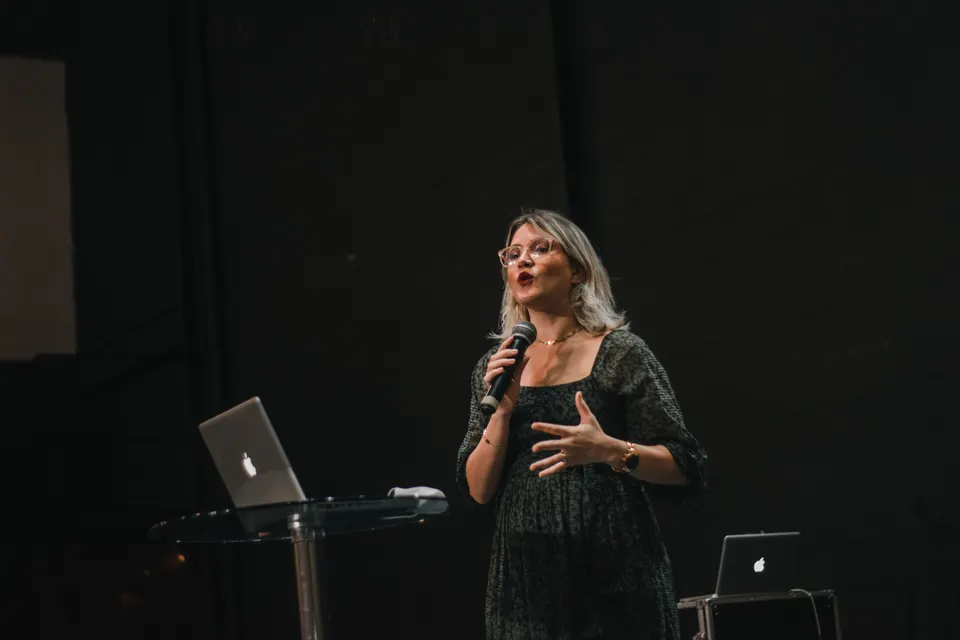
What do good professional bio examples look like?
In short
Short: "Dana Okafor is head of product at Fieldline, focusing on tools that help small clinics run on less paperwork. Dana led a scheduling launch now used by 3,000 clinics." Medium versions add an earlier role and, at most, one personal line.
| Version | Length | Use it for |
|---|---|---|
| Short, third person | About 50 words | Spoken introductions, panel listings |
| Medium, third person | About 100 words | Speaker pages, programs, press |
| Short, first person | About 50 words | Social profiles, email signatures |
| Medium, first person | About 100 words | Your website, LinkedIn "About" opening |
Should a speaker bio be different from a website bio?
In short
Yes. A speaker bio is read aloud or skimmed by an audience deciding whether to listen, so it should be third person, short and focused on why you are qualified to speak on the topic. A website bio can be warmer and first person.
Write the speaker version so a host can read it in under 30 seconds without stumbling: no parentheses, no long lists, numbers rounded. Organizers often paste your text as-is, so match any word limit they give exactly. Clear writing is itself a credential: in NACE's 2025 survey, written communication skills mattered to at least 70% of employers[NACE, 2025].

Where will you use your professional bio?
In short
On speaker and event pages, in award and fellowship applications, on your website, on LinkedIn, in press materials and in introductions others make for you. Keep one master version and trim it for each use rather than writing from scratch.
Online, your bio meets a very large audience: LinkedIn reports more than 1 billion members in more than 200 countries and territories[LinkedIn]. Pair your bio with a sharp LinkedIn headline and an elevator pitch built from the same facts, so every version of you tells one story. Artists and creators should see our artist bio builder, which follows gallery conventions, and creators pitching brands should add a media kit.
Frequently asked questions
Should a professional bio be in first or third person?
Third person for speaker pages, programs, press and anything someone else will read aloud. First person for your own website, LinkedIn and social profiles.
How long should a speaker bio be?
Keep a 50-word version for introductions and a 100-word version for event pages. If an organizer gives a limit, follow it exactly; they often paste bios straight into print.
What should I leave out of a professional bio?
Your full job history, vague adjectives such as "dynamic" and "passionate", and personal details that do not help the reader trust you. One personal line at the end is plenty.
How often should I update my bio?
Whenever your role, focus or best achievement changes, and before every application or event that asks for one. Keep a dated master copy.
The right bio, drafted for every application
Onward Scout drafts a bio from your profile for each speaking slot, award, fellowship or program that asks for one, ready to paste or upload.
Nothing is submitted without your tap. Logins, CAPTCHAs, payments and interviews stay with you.