Artist Statement Examples + Artist Statement Generator
Artist statement examples, short and long, what juries look for, the mistakes that make statements unreadable, and a free generator that writes yours in plain language.
By Onward ScoutPublished 2 min read
Free tool · runs in your browser
Artist statement generator
Describe what you make, what drives it and how you make it. Get a short and a long artist statement in plain first-person language, built only from what you write, ready to expand to the limit a call sets.
Nothing you type here is uploaded or stored by Onward Scout; the tool runs entirely in your browser.
An artist statement explains your work in plain first-person language: what you make, what it is about, the question that drives it and how you make it. The generator above writes a short and a long version from six prompts, using only what you write, so expand the long one toward 150 to 250 words with detail only you know; the examples and rules below show what juries actually look for.
What should an artist statement include?
In short
What you make, what it is about, the question or idea that drives it, how you make it, and what you hope viewers notice. Optionally, the series you are working on now. Leave out biography, awards and theory you would not say out loud.
Plain language wins. A juror reading two hundred applications remembers "I grind paint chips from demolished buildings into pigment" and forgets "my practice interrogates the liminality of urban space". If a sentence would confuse a curious friend, rewrite it.
What do good artist statement examples look like?
In short
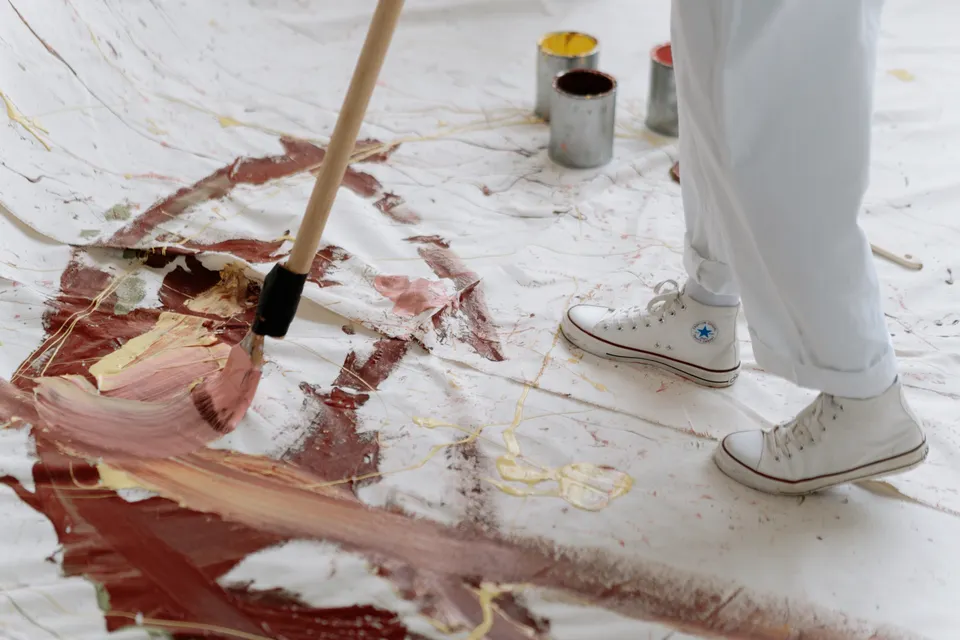
Short: "I make large-scale paintings about how neighborhoods change when the people who built them are priced out. I grind pigment from paint chips collected in buildings slated for demolition." Long versions add the driving question, current series and what viewers should take away.
| Part | Weak | Strong |
|---|---|---|
| What you make | "Mixed-media explorations" | "Large-scale paintings and wall drawings" |
| What it's about | "Identity and memory" | "Neighborhoods changing as long-time residents are priced out" |
| Process | "Intuitive, layered processes" | "Pigment ground from paint chips from demolished buildings" |
| Takeaway | "Invites dialogue" | "The weight of ordinary rooms that no longer exist" |
Why does a clear statement matter for applications?
In short
Because panels read many applications for each award, and the statement is often the first thing they read after your images. A clear statement helps them understand why your work deserves the opportunity in the minute they have.
The field is crowded. The National Endowment for the Arts counts about 2.9 million artists in the US labor force in 2024, 26% more than in 2015[NEA, 2026 report], and individual grants are scarce. At the Foundation for Contemporary Arts, for example, the emergency grants program receives an average of 100 applications a month and makes about 15 to 20 grants[Foundation for Contemporary Arts]. Project funders read statements closely: Creative Capital, for one, offers unrestricted project grants (up to $50,000) for new, original work[Creative Capital], and the statement is where you explain that work. Clarity is how you get read.

What mistakes ruin an artist statement?
In short
Art jargon, describing what the viewer should feel instead of what the work does, listing every influence, starting with childhood, and running past the limit. Each makes the reader work harder to understand your art, which is the opposite of the statement's job.
Our rule: one idea, one process, one takeaway, in words you would use at your own opening. Keep the statement separate from your artist bio, which covers your background and honors in third person. When you are ready to apply, the grants for artists finder lists major awards with their amounts and deadlines, and the creative careers hub links live open calls.
Frequently asked questions
How long should an artist statement be?
Keep a short version of 50 to 100 words and a long version of 150 to 250 words. Many open calls set their own limit; follow it exactly.
Should an artist statement be in first or third person?
First person. The statement is your voice explaining your work. Bios are the third-person document.
What is the difference between an artist statement and an artist bio?
A statement explains the work: what it is about, how you make it and why. A bio summarizes you: background, exhibitions and honors.
Should I change my statement for each application?
Keep the core, and adjust the emphasis to the call: a residency may want process, a grant the project, an exhibition the series being shown.
Find open calls that fit your work, and apply to more of them
Onward Scout finds open calls, residencies and grants that match your practice, shows each deadline and fee, and drafts the statement each application asks for.
Nothing is submitted without your tap. Logins, CAPTCHAs, payments and interviews stay with you.